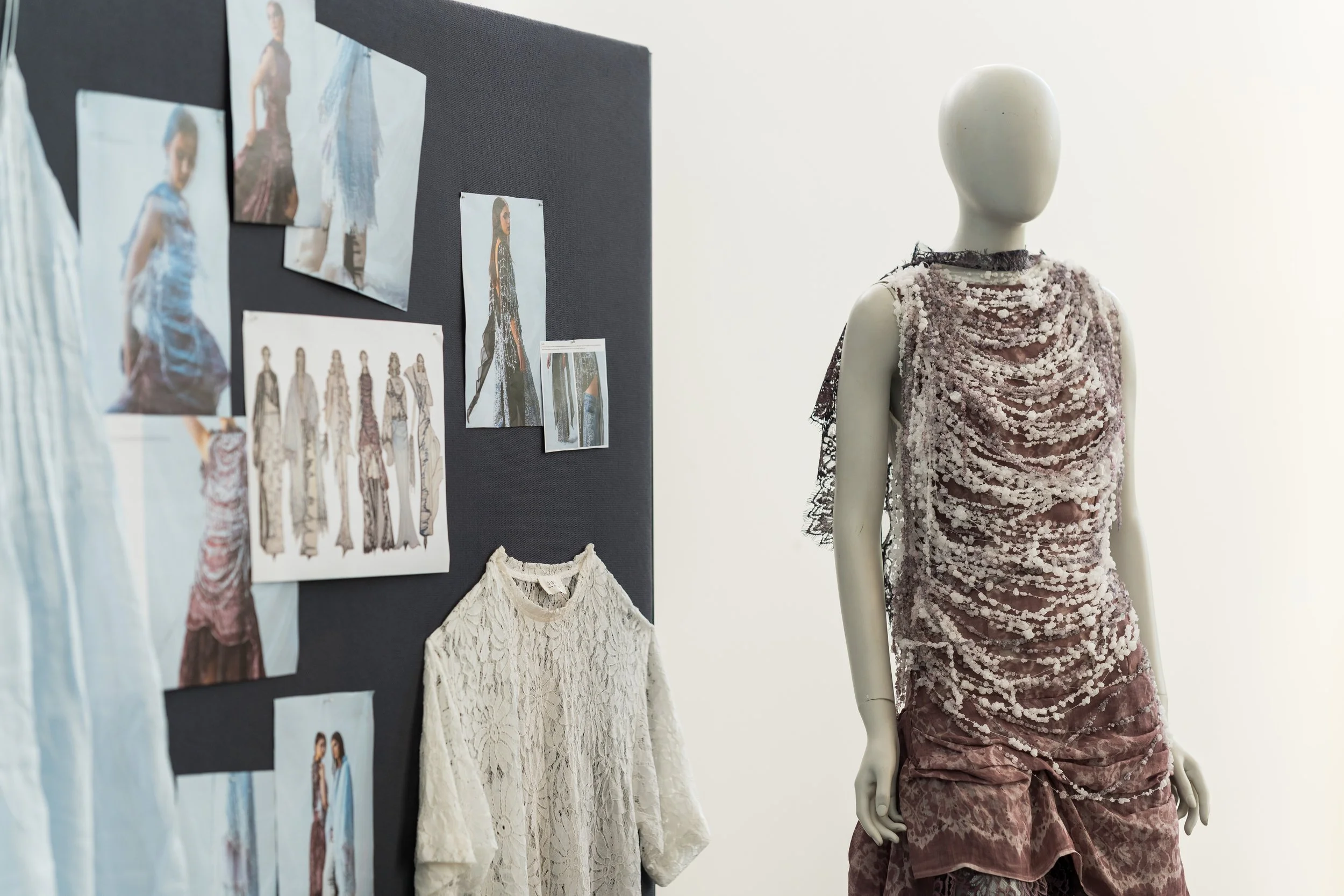
Flawless: A panel on circular fashion design reworking unwearable garments
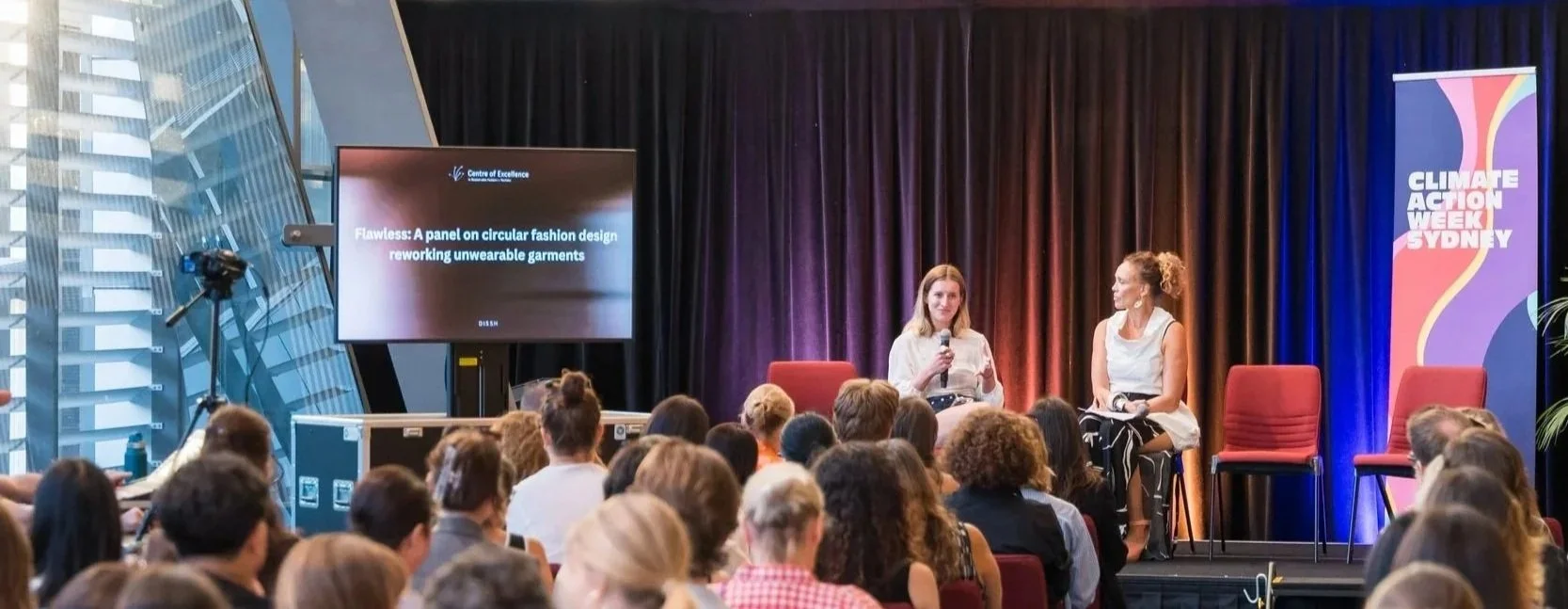
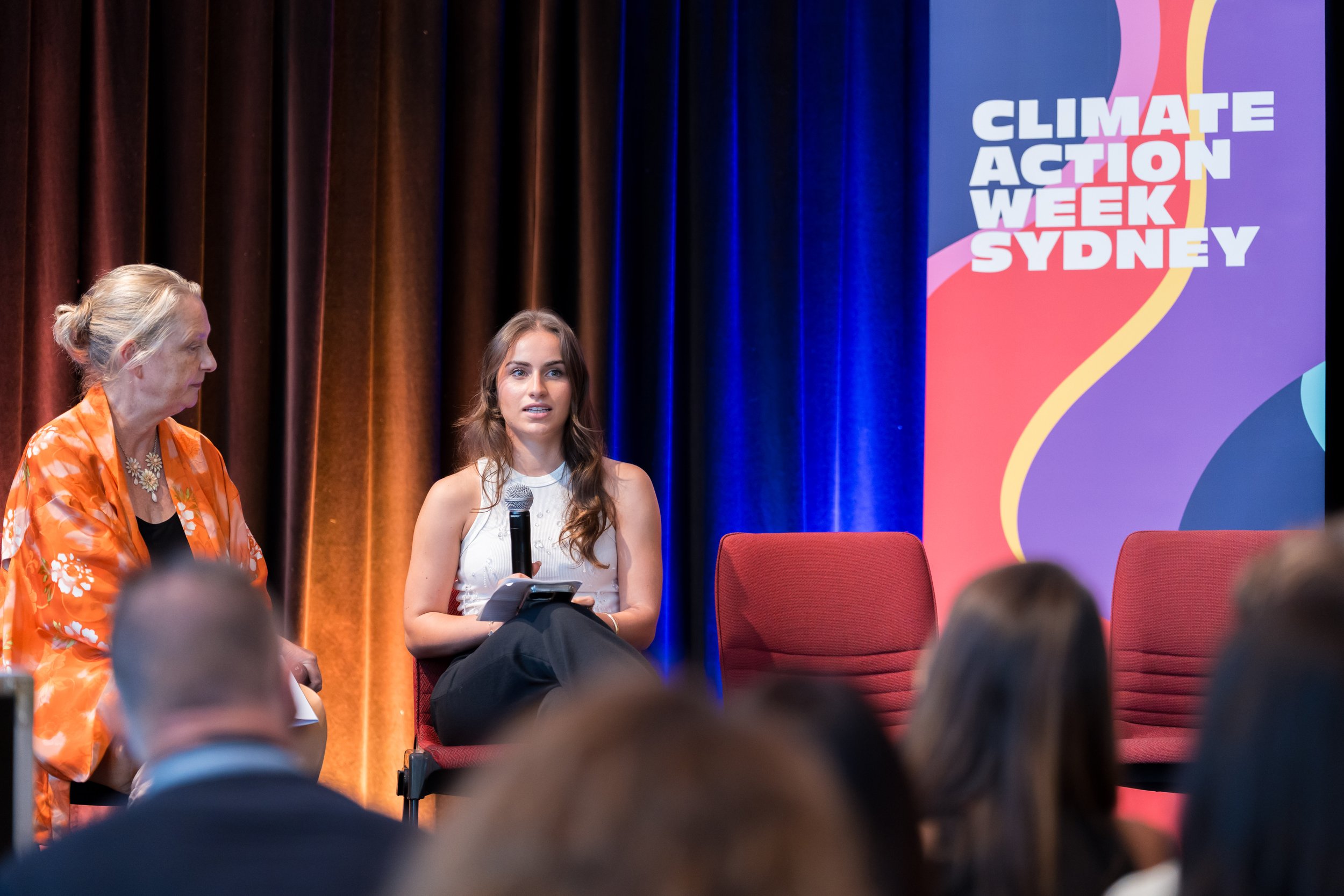
FDS Graduate Alana Grigaliunas in conversation with Laura Washington, Head of School, FDS, TAFE NSW.
Recently, as part of Climate Action Week, the Centre of Excellence hosted an evening celebrating circular design and the next generation of sustainable fashion design.
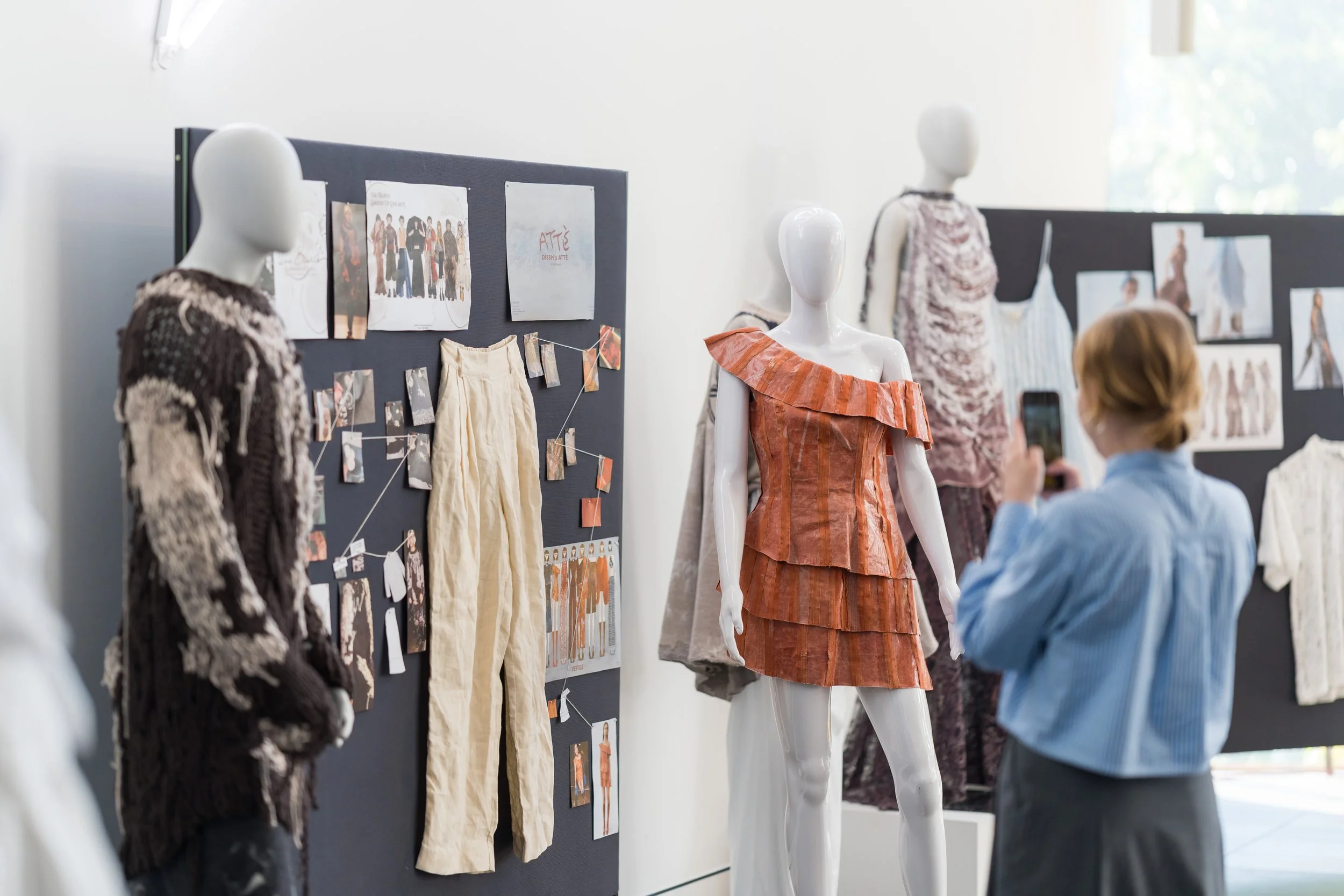
The event was a celebration of the Centre’s partnership with Australian fashion label DISSH and featured an exhibition of garments and a panel discussion with representatives from DISSH, the Fashion Design Studio (FDS) TAFE NSW, and UTS Fashion and Textiles, including students from each program.
The partnership
In 2025, DISSH donated unwearable new garments to be repurposed into new designs by students from TAFE FDS and UTS. Recent graduates of the Bachelor of Fashion Design at FDS, Alana Grigaliunas, Tate Boswarva and Isabella Panebianco-Fenech, along with UTS Fashion and Textiles Honours graduate Isabella Harris, were tasked with reworking “unusable” garments – items deemed unsellable due to faults, damage, or production inconsistencies – into their graduate collections. The results were remarkable pieces that challenged traditional ideas of waste, value and creativity within the fashion industry. The partnership will continue in 2026.
Centre Director Dr Lisa Lake highlighted some of the sustainability challenges of the industry in her opening address, including the problem of textile waste. She noted that roughly 15-20% of materials get wasted in garment production, and statistics from Thread Together tell us that 1/3 of garments go from the factory to the landfill because of overproduction. Fashion’s sustainability challenges are extremely complex. Changing supply chains, design methods, production cycles, and business models involves extreme bravery, intelligence, and cooperation from those working in industry. These adjustments need to be made with care to ensure businesses don’t collapse and people have meaningful work, all while implementing the sometimes-radical shifts needed to change production practices. But as she said of DISSH: “this is a brand not afraid to tackle these kinds of challenges head-on.”
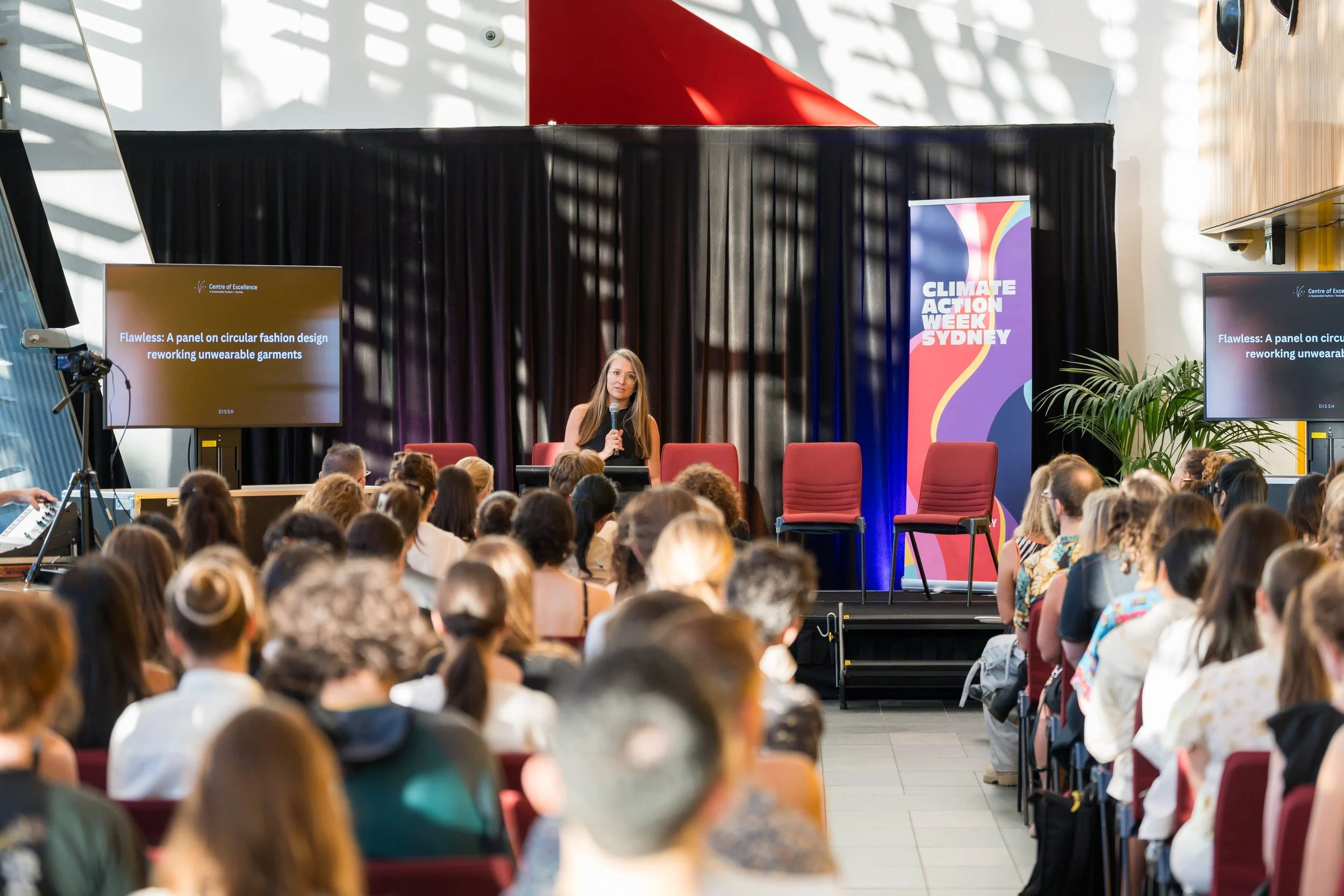
Centre Director, Dr Lisa Lake, addresses the audience.
Event highlights
The evening unfolded through a series of three conversations designed to unpack the project from industry and education perspectives.
First, DISSH Sustainability and Impact Manager Athena Savvas joined the stage to discuss the brand’s sustainability journey and its decision to repurpose unwearable garments.
The second discussion featured Laura Washington, Co-Head of FDS, in conversation with recent graduate Alana Grigaliunas, and together, they reflected on the creative and technical challenges of designing with constraints, and how working with flawed materials can push innovation beyond conventional design processes.
Finally, Dr Cecilia Heffer, Acting Course Director of UTS Fashion and Textiles, spoke with Honours graduate Isabella Harris about the role of research and experimentation in shaping more sustainable futures for fashion.
Dr Cecilia Heffer from UTS in conversation with UTS Honours Graduate Isabella Harris.
Across all three conversations a common theme emerged: collaboration between industry and education is essential to driving systemic change.
As the fashion industry grapples with mounting environmental pressures, initiatives like Flawless offer a glimpse into what the future might look like; one where imperfection is embraced, waste is reimagined, and the next generation of designers leads the charge toward a more sustainable system.